
What Makes Each Iris One of a Kind
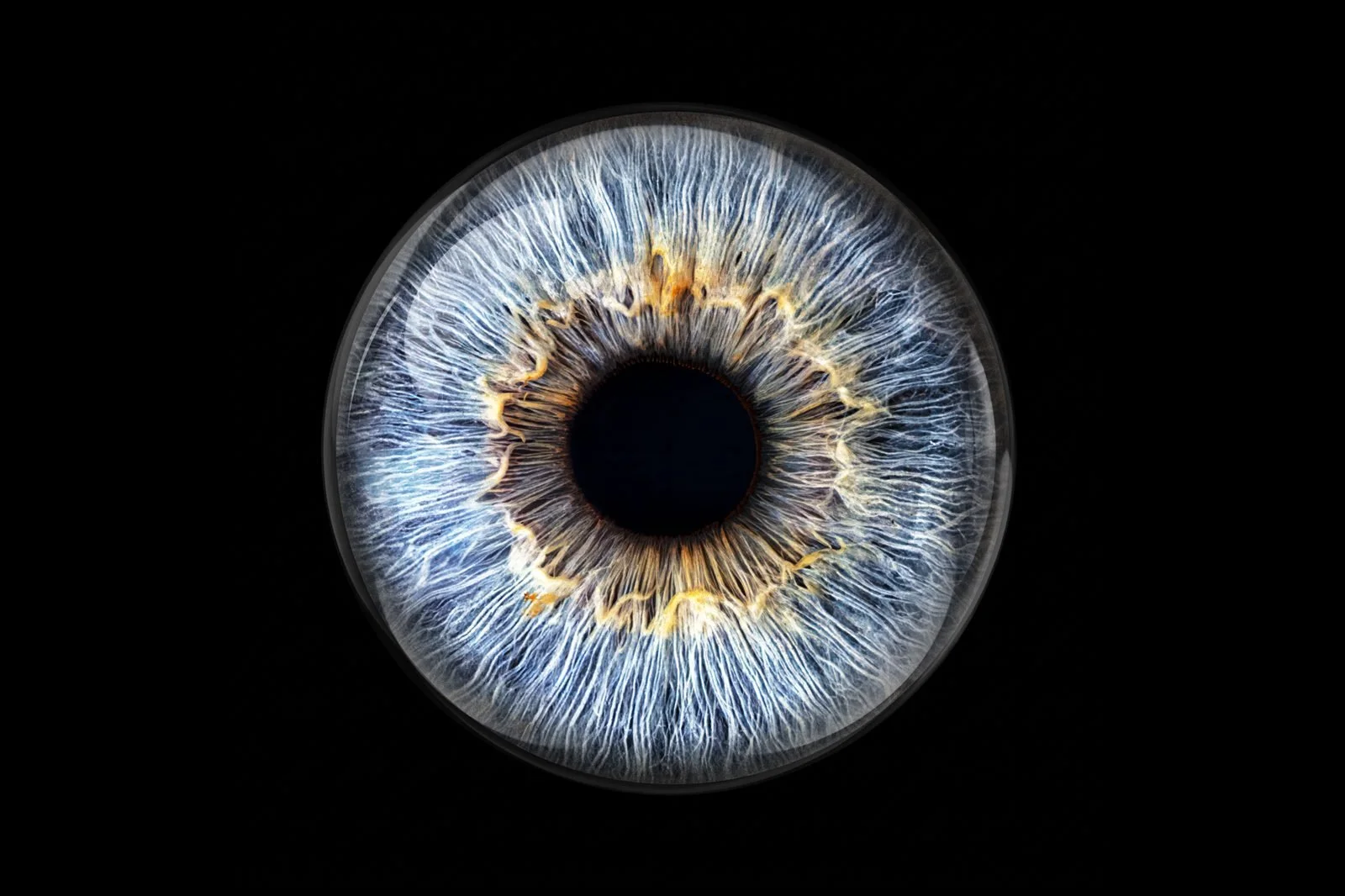
From a few feet away, an eye may look simply blue, brown, green, gray, or hazel. Move in close, and that simple color opens into something much more detailed: fine fibers, tiny openings, soft rings, and flecks of pigment arranged in a pattern that belongs to one eye alone.
That is why an iris portrait feels so personal. It is not a symbol chosen to represent you. It begins with a real part of you that no one else has in quite the same form.
1. Eye color is only the beginning
Eye color is the first thing most of us notice, but it tells only part of the story. Pigment and the structure of the iris affect whether an eye appears light or dark, warm or cool. Inside that color are countless changes in texture and tone.
Two people can both have brown eyes and still have completely different patterns. One may show copper flecks around the pupil, while another has broad dark rings, fine spokes, or small areas where the texture opens up.
2. The pattern begins before birth
Genetics influence eye color and the basic structure of the iris, but the exact pattern develops as the tissue forms and folds during prenatal growth. Those tiny variations create the arrangement that makes one iris different from another.
The result is not a repeating design. Even two eyes with the same color can have very different structures when viewed up close.
3. Fibers create the texture
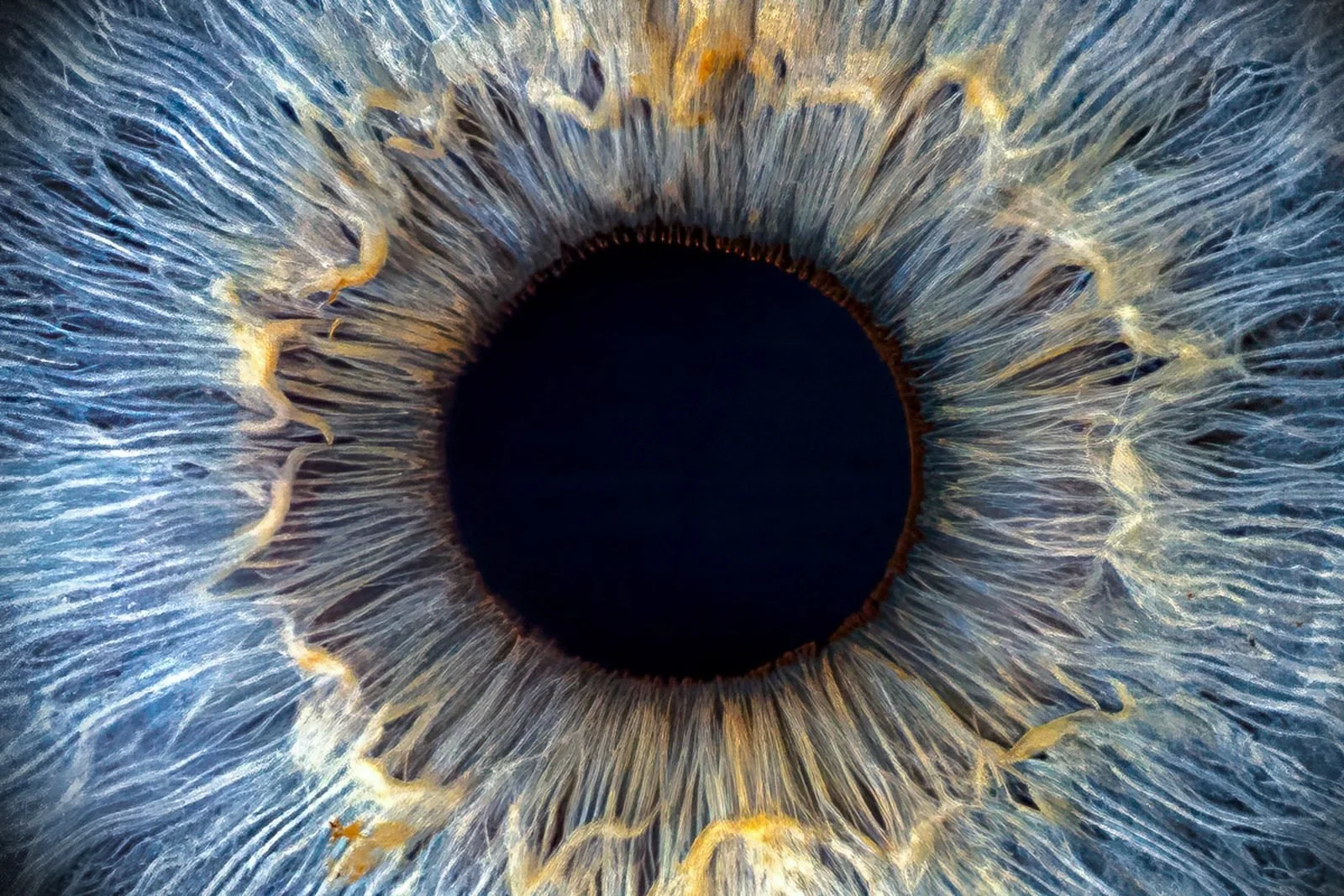
The iris contains a layer of connective tissue called the stroma. In a macro photograph, its fine strands can look like spokes, waves, branches, or threads moving outward from the pupil.
Some areas appear tightly packed. Others are more open. That changing density gives the iris much of its depth and movement, especially when it is photographed large enough to see the detail clearly.
4. Crypts, rings, and flecks add detail
Crypts are small openings in the front layers of the iris. In a portrait, they may look like dark windows or irregular spaces between the fibers. Their size, shape, and placement become part of the eye’s individual pattern.
The circular lines near the outside of the iris are often contraction furrows—natural folds that become more visible as the pupil changes size. Flecks add another layer. Many are small concentrations of melanin, the pigment that helps shape eye color. Together, these details turn a color into a landscape.
5. Your own two eyes are different
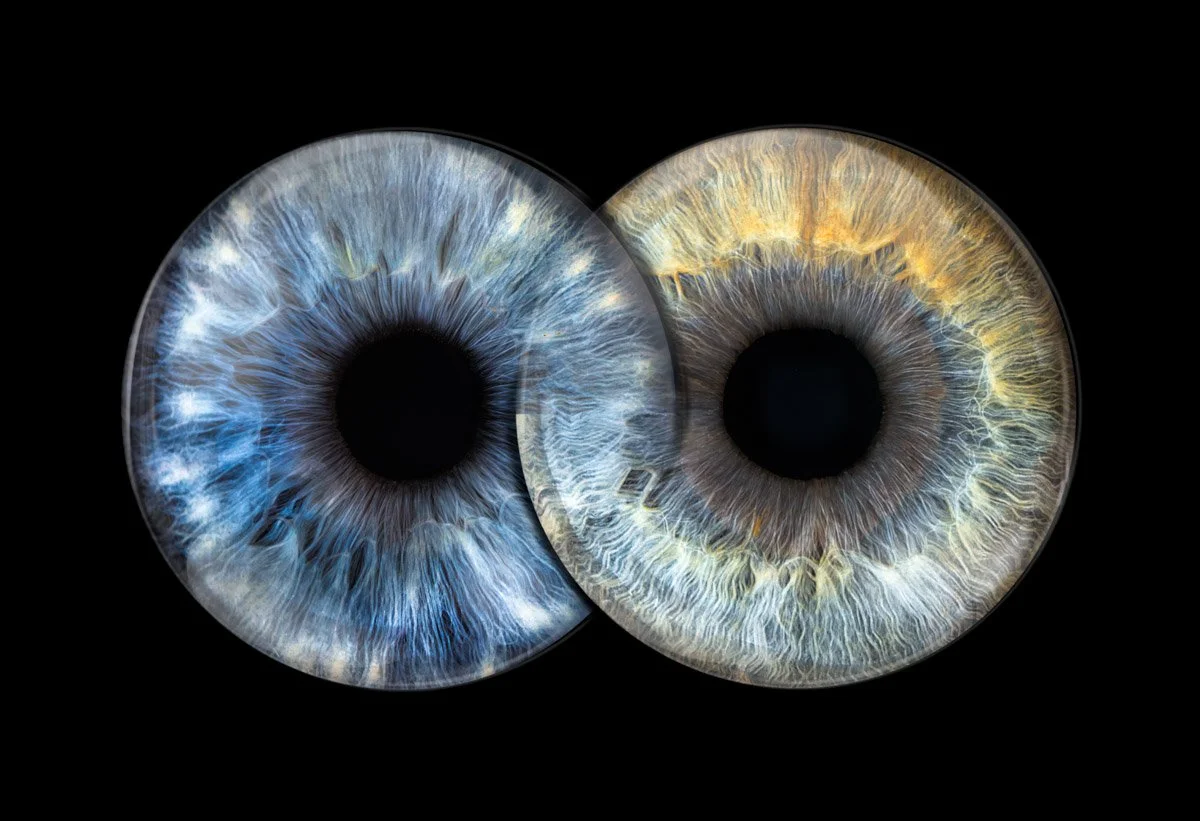
You do not have one iris pattern repeated twice. Your left and right eyes are structurally distinct, even though they share the same genetics and usually look similar from normal viewing distance.
That degree of variation is why iris patterns can be used for biometric recognition. For portraiture, it means each eye deserves to be photographed as its own subject. In a couples or family composition, every iris keeps its individuality even when the portraits are brought together in one piece.
6. Macro photography reveals what mirrors miss
Most people have never seen their iris at this scale. A mirror shows the color. A real macro photograph reveals the structure inside it—the fine lines, irregular shapes, rings, and color shifts that are easy to miss in everyday life.
At Midnight Noon Studio, every iris portrait begins with a real photograph taken in the Wilmington studio. It is not an AI-generated eye or a fantasy filter. Each image is hand-edited to bring forward the detail the camera captured while keeping the finished portrait true to the person.
7. The finished portrait is one of one
An iris portrait cannot be recreated from someone else’s session, because the subject itself is different. The pattern, color, and texture all come from one specific eye.
That is what makes the finished image more than a close-up. Whether it stays digital or becomes wall art, it is a one-of-one piece built from detail that already belonged to you.
See your own iris up close
The most surprising part is seeing how much has been there all along. Book your iris portrait session online or call (910) 218-8045 to plan your visit to the Wilmington studio.